29 September 2026
How Dental Implants in Calabasas CA Boost Confidence
Presented by @messiahwkhc733
Confidence rarely disappears all at once. More often, it erodes in small, ordinary moments. Someone starts covering their mouth when they laugh. They angle their face away in photos. They order softer foods at restaurants without mentioning why. They speak a little less in meetings because they are self-conscious about a gap, a denture that shifts, or teeth that no longer feel dependable.
That is why conversations about missing teeth are never just about teeth. They are about comfort, self-image, and the freedom to move through daily life without second-guessing every smile or bite. For many people, dental implants offer a meaningful way back to that ease. In a place like Calabasas, where professional, social, and personal confidence often overlap, the impact can be especially noticeable.
Dental implants are not a cosmetic shortcut. They are a structural, medical solution designed to replace missing tooth roots and support a crown, bridge, or denture. When treatment is planned well and carried out carefully, implants can improve appearance, chewing strength, speech, and long-term oral stability. Those benefits tend to reach far beyond the dental chair.
Why missing teeth affect more than appearance
A missing tooth changes the way a person looks, but that is only part of the story. It can also change how the jaw functions, how the bite balances, and how the surrounding teeth carry force. Over time, neighboring teeth may drift into the open space. Opposing teeth can over-erupt. Gum tissue can recede in uneven patterns. Bone in the area often begins to shrink because it is no longer being stimulated by a tooth root.
Patients often describe a more immediate problem first: they do not feel like themselves. A front tooth gap may make them avoid smiling. A missing molar may cause them to chew on one side until that side becomes sore and tired. Dentures, while valuable and appropriate in many cases, can create their own anxieties if they slip during conversation or meal times.
Confidence suffers because the problem is public and private at the same time. A person may be bothered by the mirror, but also by the constant mental load. They are always monitoring, adjusting, compensating. That low-grade self-consciousness is exhausting. Restoring a tooth in a way that feels stable and natural can relieve more stress than people expect.
What makes implants different
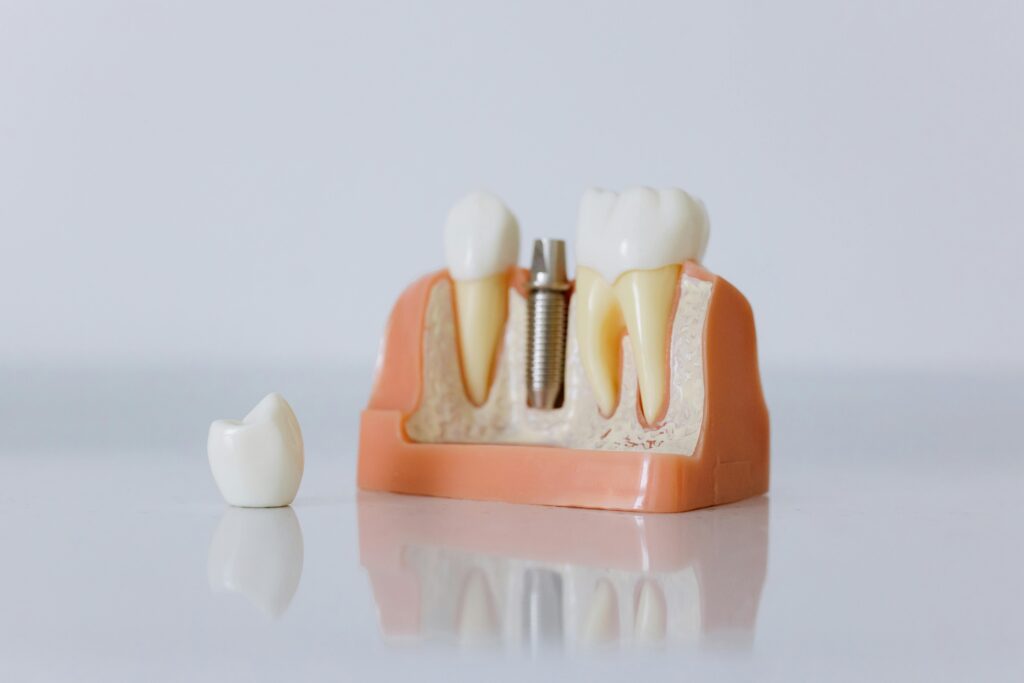
A dental implant is typically a small titanium post placed in the jawbone, where it integrates with the bone over time. Once healed, it can support a custom restoration that resembles a natural tooth in shape, color, and function. The major distinction is that an implant replaces not only the visible tooth, but the root structure as well.
That matters for confidence because stability changes behavior. A removable option may look fine, but if a patient worries it will shift while speaking, laughing, or eating, confidence remains fragile. Implants tend to restore a stronger sense of permanence. Patients often say the same thing in slightly different words: “I stopped thinking about it.” That is a powerful outcome.
There is also a facial support component. Bone loss after tooth extraction can affect the shape of the jaw and lower face over time. In some cases, especially when several teeth are missing, that change can make someone appear older or more drawn. Implants help preserve bone in a way that other replacements generally do not, which can support a fuller, healthier appearance.
When people search for Dental Implants Calabasas CA, what they are often really searching for is normalcy. They want a solution that lets them stop planning their life around a dental problem.
The confidence shift often starts before the final crown
One of the more interesting aspects of implant treatment is that confidence often improves well before everything is finished. Once a patient has a clear plan, the emotional weight tends to lighten. They know the problem is being addressed. They can see a timeline. They understand what is temporary and what the final result will be.
In practice, that shift matters. People who have delayed treatment for years often carry embarrassment into the consultation. They may apologize for how long they waited, as though dental problems are a moral failing rather than a medical issue. A good implant team changes that tone quickly. The conversation becomes practical: What happened? What does the bone look like? Is grafting needed? What are the options? How do we create a result that fits the bite, the smile, and the budget?
That process can be deeply reassuring. Confidence grows when uncertainty shrinks.
How implants improve everyday interactions
The psychological impact of implants becomes obvious in ordinary settings. Patients may not describe their result in technical terms. They talk about dinners out, work presentations, dating, holiday photos, and smiling without rehearsing it.
Several day-to-day changes come up repeatedly:
- Smiling feels spontaneous again instead of managed.
- Speech sounds clearer when there is no shifting appliance or gap affecting airflow.
- Chewing becomes more comfortable, which makes social meals less stressful.
- People stop touching or checking the area with their tongue all day.
- Photos become less awkward because they are no longer hiding one side of the mouth.
These may sound like small wins from the outside, but they add up quickly. A person who is not preoccupied with a visible dental issue tends to appear more relaxed, open, and self-assured. That is not vanity. Dental Implants Calabasas CA It is the natural result of removing a persistent source of tension.
The professional side of self-confidence
Calabasas has a strong mix of entrepreneurs, executives, creatives, service professionals, and public-facing workers. In many careers, communication is central. People spend hours in meetings, on video calls, at networking events, or in client consultations. If someone feels distracted by a missing tooth or an unstable denture, it can subtly affect posture, eye contact, and speech.
No ethical dentist should claim that implants guarantee career success. Life is more complicated than that. Still, presentation matters. When a person feels comfortable with their smile, they are often more expressive and engaged. They speak with less guarding. They stop wondering whether others are noticing what they notice. That freed attention can improve how they come across in interviews, sales conversations, and leadership settings.
There is also a practical advantage. A stable bite makes it easier to eat comfortably during long workdays, business lunches, and travel. People who have been living with dental limitations often do not realize how much energy those limitations consume until the problem is fixed.
Why a natural look matters so much
Confidence does not come from having a technically successful implant alone. It comes from having one that disappears into the smile naturally. That means the restoration has to fit the face, gumline, neighboring teeth, and bite. A tooth can be “there” and still feel wrong if the shape is too bulky, the color is too bright, or the gum contour looks unnatural.
This is one reason planning matters so much in visible areas, especially the front teeth. The best implant cases involve coordination between surgical placement and final restoration design. Positioning influences everything: where the crown emerges, how the gum heals, and whether the result looks believable in natural light. Patients are usually less interested in hearing the phrase “ideal angulation” than in hearing “this will look like your tooth belonged there.”
A well-done implant should not draw attention to itself. The goal is not a smile that looks dental. The goal is a smile that looks healthy, balanced, and entirely your own.
Bone loss, facial structure, and the quiet aging effect
There is a less obvious way implants support confidence, and it has to do with facial structure. When a tooth is lost, the bone that once supported it no longer receives the same stimulation through chewing forces. Over time, the body begins to resorb that bone. The speed varies depending on the person, the tooth location, and overall health, but the pattern is common.
This matters because bone loss can change the architecture of the smile and lower face. Around the mouth, support diminishes. Lips may appear less full. In larger areas of tooth loss, the face can take on a collapsed or aged look. Traditional bridges fill the visible space but do not preserve the underlying bone in the same way. Dentures can restore appearance but may accelerate pressure-related changes in some situations, particularly when they rest directly on the gums without implant support.
Implants help address that root-level problem. For many patients, this translates into a result that feels more youthful, though “healthier” is often the better word. People notice that their face looks more balanced and their smile sits more naturally. They may not be able to identify exactly why, but they feel more like themselves again.
Not every candidate is straightforward, and that is where judgment matters
One of the most important things to understand about Dental Implants Calabasas CA is that good outcomes depend on case selection and planning, not just enthusiasm for the procedure. Many adults are candidates, but not every implant case is simple.
Some patients have been missing a tooth for years and have significant bone loss. Others grind their teeth heavily, which increases the mechanical demands on the implant and restoration. Smokers may face slower healing and higher complication risk. Diabetes, certain medications, gum disease history, and sinus anatomy can all influence treatment planning. Sometimes a bone graft is needed before or at the time of implant placement. In the upper back jaw, a sinus lift may be discussed if available bone height is limited.
These factors do not automatically rule out treatment. They simply mean that a responsible clinician has to weigh the biology, the forces, and the patient’s habits. Confidence should be built on realism. A careful dentist explains where the risks are, what can be improved, and what maintenance will be required afterward.
That transparency often reassures patients more than a glossy promise ever could. People feel safer when they know their case is being judged thoughtfully rather than sold quickly.
The treatment timeline and the emotional side of waiting
Implants are not instant. In some cases, a tooth can be removed and an implant placed the same day. In others, healing is staged over several months. The implant needs time to integrate with bone, and sometimes the site needs grafting first. Final crowns are typically placed only after the foundation is ready.
That waiting period can be frustrating, especially for patients eager to move on. Yet it is often part of what makes the final result more predictable. Rushing biology is rarely wise. In my experience, patients handle the timeline better when they understand what each phase is accomplishing. Temporary restorations can also help preserve appearance during the process, depending on the case.
A realistic treatment conversation usually includes the following points:
- how much bone and gum tissue are present now
- whether grafting or extraction is needed first
- how long healing may take before the final tooth is attached
- what temporary options exist during treatment
- what maintenance habits will protect the implant afterward
Clear expectations prevent disappointment. They also give patients a sense of control, which is essential when someone has already felt vulnerable about their smile.
The role of comfort, technology, and communication
Patients often fear implants because they imagine a dramatic surgical ordeal. The reality is usually more manageable than expected, particularly when treatment is well organized. Local anesthesia is standard, and some offices offer sedation for patients with higher anxiety. Discomfort afterward is often described as less than a difficult extraction, though individual experiences vary.
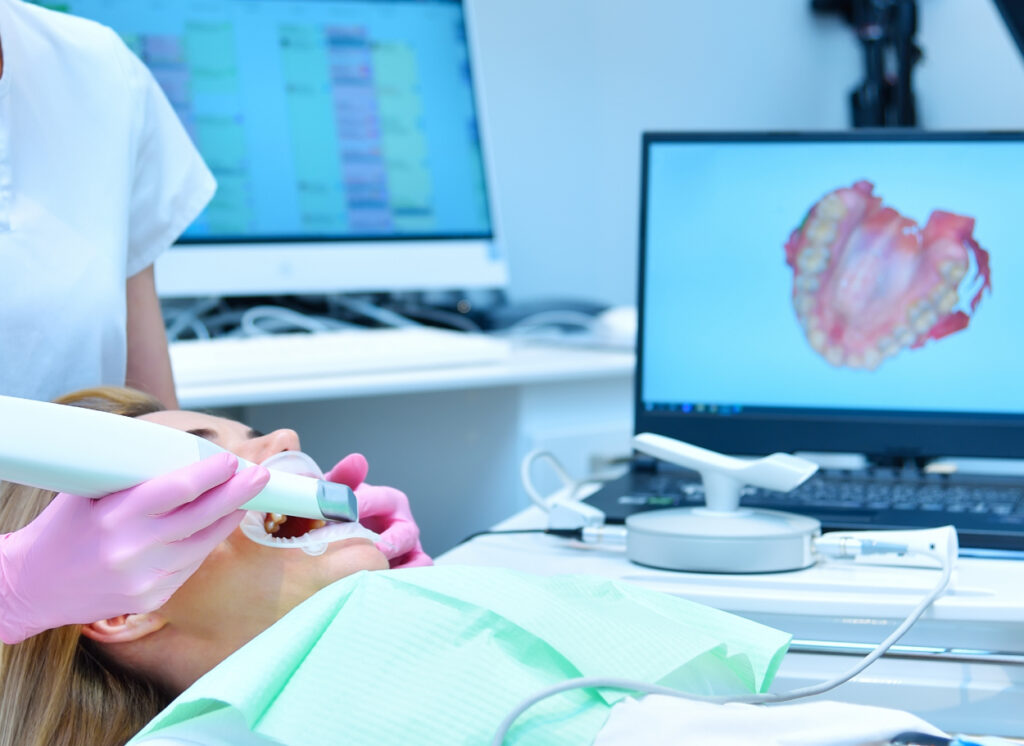
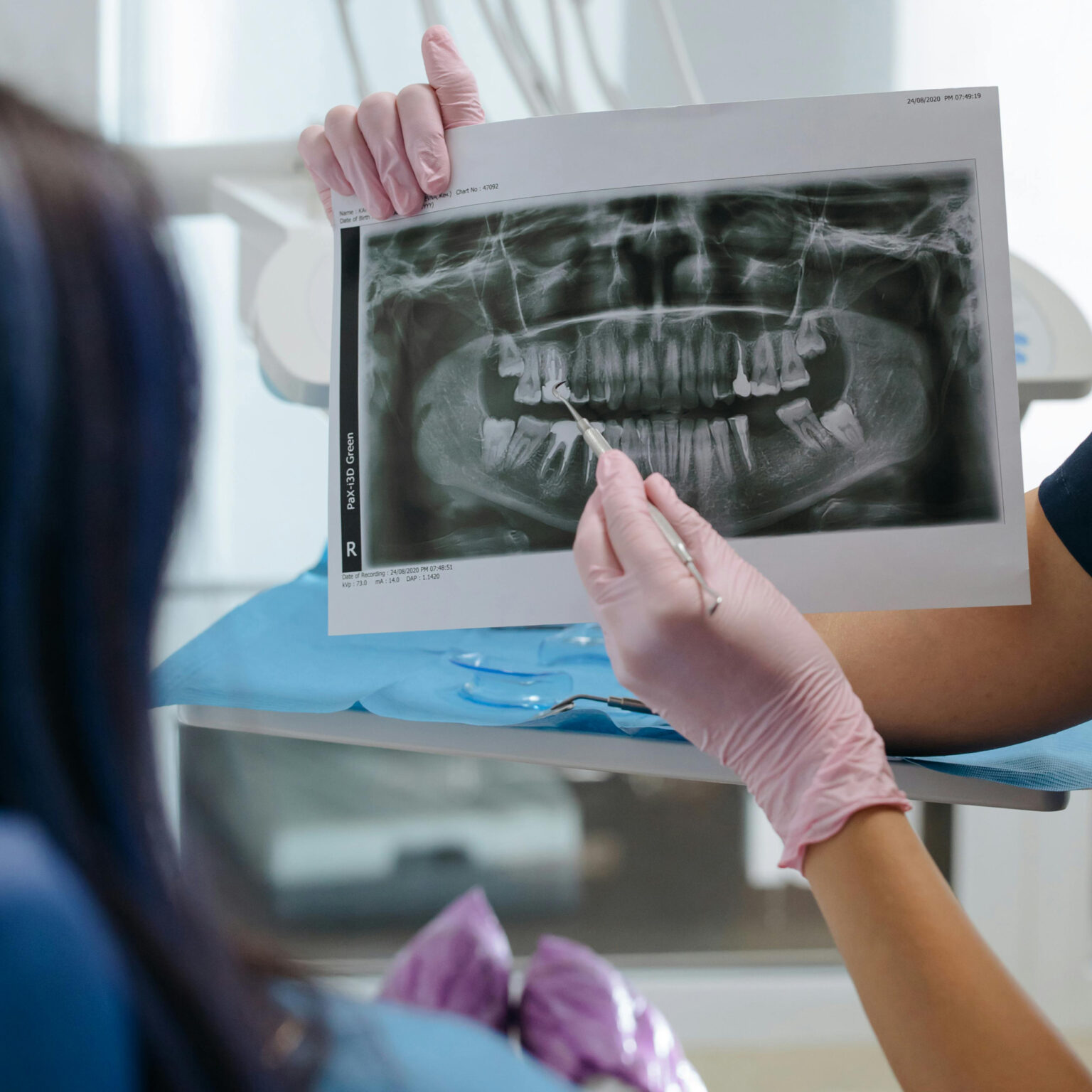
Modern imaging has also improved precision. Three-dimensional scans help clinicians evaluate bone volume, nerve location, sinus position, and prosthetic spacing before surgery begins. That level of planning tends to improve safety and restoration design, especially in esthetic cases. Still, technology is only as good as the judgment behind it. A scan does not replace experience. It supports it.
Communication matters just as much. Patients gain confidence when the team explains what they will feel, what to expect that evening, how swelling typically behaves, and when to call with concerns. A person who understands the process is less likely to catastrophize normal healing. Good care feels organized long before the final tooth is delivered.
Implant-supported dentures and the return of social ease
For patients missing many or all teeth, confidence gains can be dramatic. Traditional dentures can restore appearance, but they may move, click, create sore spots, or reduce bite strength. Lower dentures are particularly notorious for instability because they have less surface area and more interference from tongue movement.
Implant-supported dentures change that experience. Depending on the design, a denture may snap into place on a few implants or be fixed more permanently by the dentist. Retention improves. Chewing often becomes easier. Speech can feel more secure. Social fear drops because the appliance is not floating on the gums the way a conventional denture does.
Patients who have struggled with loose dentures often become more outgoing after treatment. They dine out more often. They choose foods they had stopped eating. They laugh freely. The emotional relief can be striking because the original problem touched so many parts of life.
Cost, value, and the confidence equation
It would be unrealistic to discuss implants without mentioning cost. Implants are an investment, and the total fee can vary widely depending on the tooth location, whether grafting is needed, the complexity of the restoration, and the materials involved. A single straightforward implant is one financial picture. Multiple implants with advanced grafting and full-arch restoration are another.
Patients sometimes compare the price of an implant to a bridge or denture and wonder why they should pay more. The best answer is not sales language. It is function and longevity. An implant does not rely on neighboring teeth for support the way a traditional bridge does, and it can help preserve bone. It often feels more like having a natural tooth back. For many people, that combination of comfort, stability, and confidence justifies the investment.
That said, value depends on proper maintenance. Implants can fail if disease, overload, or poor hygiene is ignored. They are durable, not invincible. Daily cleaning, regular exams, and bite monitoring remain essential. Patients deserve that honest context.
Choosing the right provider in Calabasas
The phrase Dental Implants Calabasas CA may start as an online search, but choosing a provider should go beyond location. Implant treatment sits at the intersection of surgery, restoration, aesthetics, and long-term maintenance. What matters most is whether the team evaluates your case comprehensively and explains the options clearly.
A good consultation should feel calm, specific, and unhurried. You should leave knowing what problem is being solved, what the sequence looks like, what alternatives exist, and where the uncertainties are. If a provider glosses over bone quality, gum condition, bite forces, or healing time, that is a concern. If they discuss those factors plainly and tailor the plan to your anatomy and goals, that is usually a better sign.
Confidence in the result often begins with confidence in the process. When patients trust the plan, they tend to navigate treatment with less anxiety and more patience.
What patients often notice after the implant is complete
The most meaningful outcomes are often subtle. A person may expect to be excited about the visible tooth, and they are. But what tends to surprise them is the return of mental quiet. They stop checking their smile in every reflective surface. They stop calculating which foods are safe. They stop wondering if other people can tell.
That is the deeper confidence boost. Not louder confidence, not performative confidence, just steadier confidence. The kind that lets someone focus on the conversation, the meal, the family photo, the presentation, the first impression. A secure smile does not solve every problem in life, but it removes one that can weigh on a person every day.
For people living with missing teeth, the emotional burden is often underestimated by everyone except the person carrying it. Dental implants can lift that burden in a way that feels both practical and personal. They restore structure, function, and appearance, yes. More importantly, they restore ease.
And ease, in daily life, is often what confidence looks like.
Oaks Dental
5000 Parkway Calabasas, Suite 308
Calabasas, CA 91302, United States
Phone: +1 (818) 412-8349
FAQ About Dental Implants Calabasas CA
How much does a dental implant cost in California?
Costs vary with the number of teeth replaced, restoration type, imaging, and any extractions or bone grafting. Request an itemized estimate after an examination; a single advertised price may not include every treatment stage.
Can people with autoimmune disease get dental implants?
Some people may qualify, but the condition, medications, oral health, and healing risks require individual assessment. Share your medical history with your dentist, who may coordinate with your treating physician.
Can you have dental implants if you have osteopenia?
Osteopenia does not by itself establish whether implants are suitable. Your dentist must evaluate jawbone support and review bone-related medications and other risks before recommending treatment.